
Building Conversational Skills in Preschool Through Play
In preschool classrooms, conversations are happening everywhere: during free play, snack time, circle discussions, and dramatic play. These everyday interactions are where children begin learning some of the most important social and communication skills they will carry for life.
Strong conversation skills help children:
- Build friendships
- Express needs and emotions
- Develop confidence
- Strengthen listening skills
- Support early literacy and language development
The best part? Preschoolers learn these skills most naturally through play.
Rather than formal lessons, conversation skills grow through engaging activities that encourage children to take turns speaking, ask questions, listen to others, and stay connected to a topic. Below are 15 simple, play-based conversation builders grouped by classroom setting to help educators intentionally strengthen communication skills throughout the day.
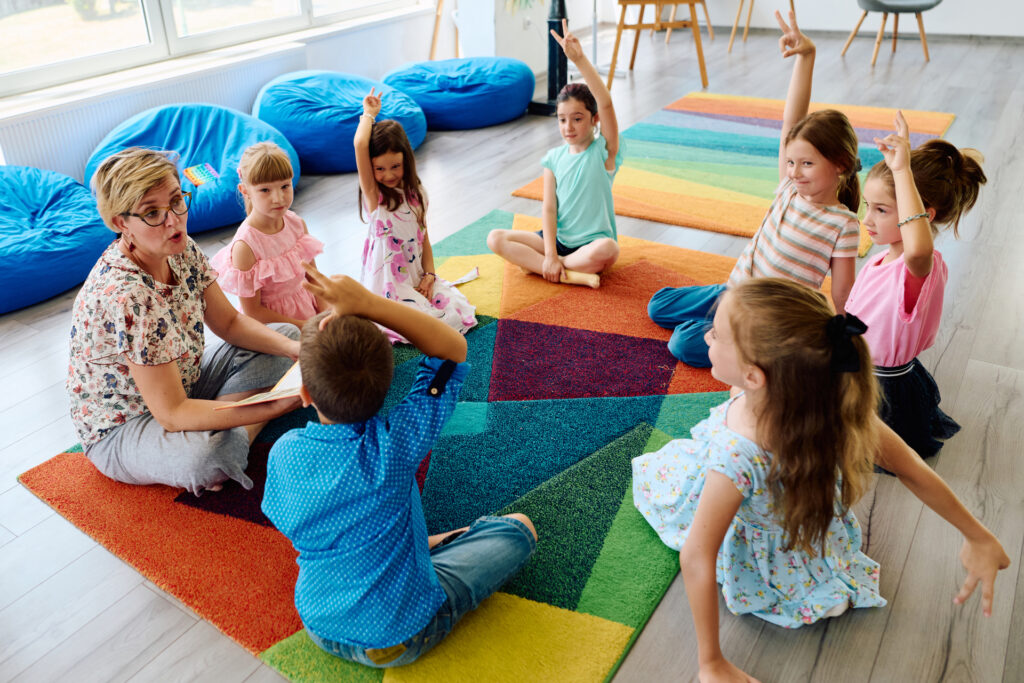
Circle Time Conversation Builders
Circle time is one of the best opportunities to practice group communication in a structured but supportive setting. There are so many different activities that can be played as a small group, and they all encourage language development and conversation amongst preschoolers.
1. Pass the Puppet
Use a classroom puppet or stuffed animal as the “talking friend.” Only the child holding the puppet gets to speak.
Skills Practiced
- Turn-taking
- Listening
- Waiting patiently
Teacher Prompts
- “Whose turn is it now?”
- “Let’s listen while Emma shares.”
- “What would you like to tell the puppet?”
2. Question of the Day
Ask a simple and engaging question each morning.
Examples
- “What is your favourite snack?”
- “Would you rather fly or swim?”
- “What makes you laugh?”
Skills Practiced
- Answering questions
- Speaking in front of a group
- Staying on topic
Teacher Prompts
- “Can you tell us more?”
- “Who has the same idea?”
- “What do you think about that?”
3. Finish the Story
Start a silly story and let each child add one sentence. This is such a fun and collaborative way to get kids involved in conversation and spark their imaginations
Skills Practiced
- Conversational flow
- Listening to others
- Building on ideas
Teacher Prompts
- “What happened next?”
- “Can you add to Maya’s idea?”
- “Let’s keep the story going.”
4. Mystery Object Talk
Place an object in a bag and let children ask questions to guess what it is. Kids of all ages tend to love this game!
Skills Practiced
- Asking questions
- Descriptive language
- Taking conversational turns
Teacher Prompts
- “What question could help us?”
- “Can you ask using ‘is it…’?” i.e. soft, hard, something you play with?
- “Who has another clue question?”
5. Partner Share and Report
Children turn to a partner, discuss a question, then share their partner’s answer with the group. It’s also a great way to build some friendships and meet new friends who they haven’t yet played with.
Skills Practiced
- Listening carefully
- Retelling information
- Social confidence
Teacher Prompts
- “What did your friend say?”
- “Can you tell the class about your partner?”
- “Did anyone hear something similar?”
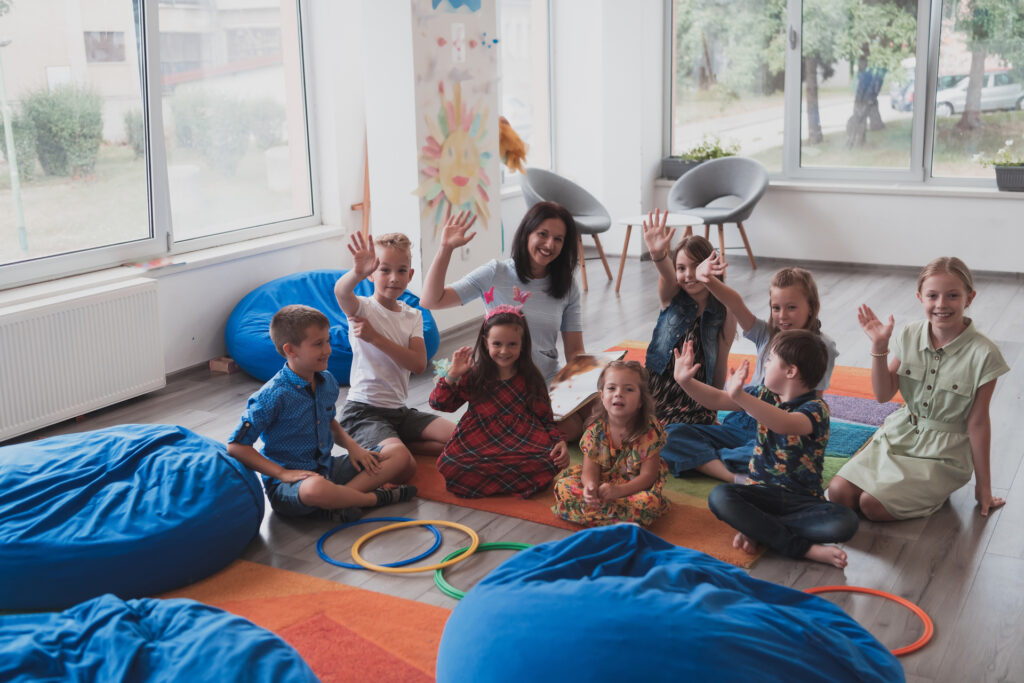
Small Group Conversation Builders
Small groups create a lower-pressure environment where children often feel more comfortable speaking and interacting.
6. Snack Time Chats
Use snack time intentionally as a conversation opportunity rather than a quiet transition.
Skills Practiced
- Back-and-forth conversation
- Asking peers questions
- Social interaction
Teacher Prompts
- “Can you ask your friend a question?”
- “What does that remind you of?”
- “Tell us about your weekend.”
7. Conversation Dice
Create dice with simple prompts or pictures.
Examples
- Favourite animal
- Something you like outside
- A food you enjoy
Skills Practiced
- Responding to prompts
- Expanding vocabulary
- Speaking clearly
Teacher Prompts
- “Can you explain why?”
- “Who else likes that?”
- “What happened when you did that?”
8. Build Together Challenge
Give children a shared building task with blocks, magnetic tiles, or loose parts. Not only is this fun, but it’s a great cooperative play idea for kids of all ages.
Skills Practiced
- Cooperative communication
- Problem-solving language
- Staying on topic
Teacher Prompts
- “What should we build next?”
- “How can we work together?”
- “Can you tell your friend your idea?”
9. Emotion Cards Discussion
Show emotion cards and ask children to discuss times they felt that way. You can download our free emotion cards to use!
Skills Practiced
- Emotional vocabulary
- Listening and responding
- Personal storytelling
Teacher Prompts
- “What made you feel happy?”
- “What helps when you feel sad?”
- “Has anyone else felt that way?”
10. Guess My Animal
One child thinks of an animal while others ask questions to figure it out.
Skills Practiced
- Asking purposeful questions
- Conversation sequencing
- Listening carefully
Teacher Prompts
- “What question could help?”
- “Did we already ask that?”
- “What clues do we know so far?”
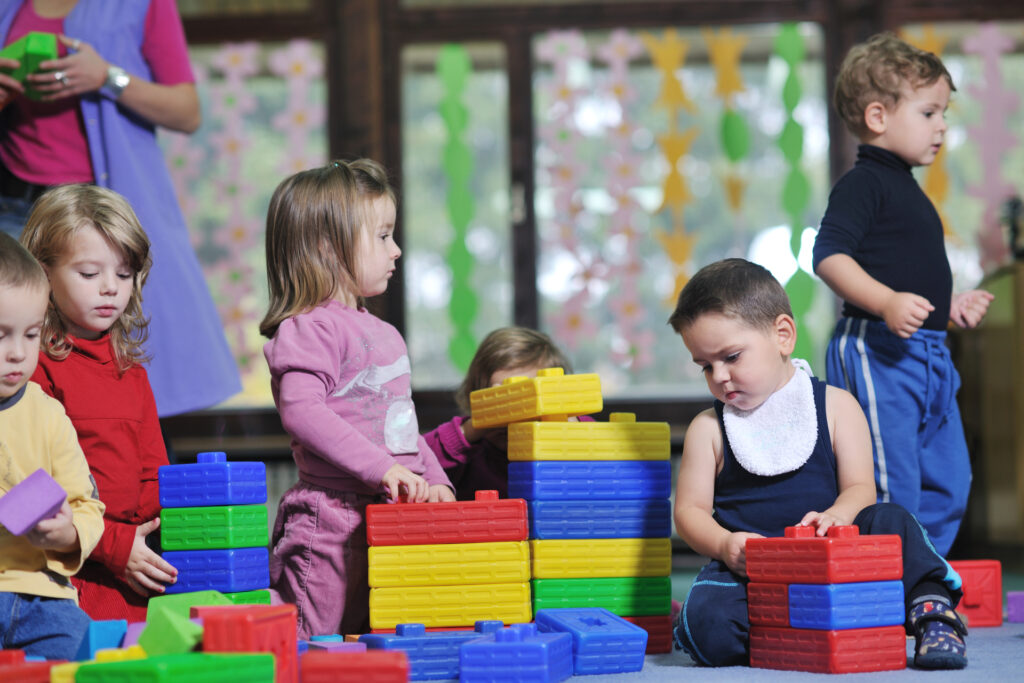
Conversation Builders for Play Time
Think about naturally encouraging child-led conversations and imaginative interactions during these playtime activities.
11. Restaurant Dramatic Play
Transform dramatic play into a restaurant with menus, order pads, and pretend food. Who doesn’t love playing restaurant?
Skills Practiced
- Conversational exchanges
- Social greetings
- Question-and-answer skills
Teacher Prompts
- “What would you like to order?”
- “Can I take your order?”
- “How will you ask politely?”
12. Interview Station
Set up toy microphones and let children “interview” each other. This is a fun way for them to pretend they are newscasters!
Skills Practiced
- Asking and answering questions
- Eye contact
- Staying engaged in conversation
Teacher Prompts
- “What question could you ask next?”
- “Tell me more about that.”
- “How can you respond to your friend?”
13. Puppet Theatre Conversations
Let children use puppets to act out conversations and stories.
Skills Practiced
- Dialogue
- Social language
- Perspective-taking
Teacher Prompts
- “What would your puppet say?”
- “How does the other puppet respond?”
- “Can they solve the problem together?”
14. Collaborative Art Projects
Invite children to work on one shared art piece together. This is a great way to encourage creativity and collaboration.
Skills Practiced
- Sharing ideas
- Negotiation
- Cooperative conversation
Teacher Prompts
- “What should we add next?”
- “Can you ask your friend for their idea?”
- “How can we work together?”
15. Conversation Starters
Create baskets or jars filled with conversation starters related to topics children enjoy. This website a great place to find some fun ideas, with free printable.
Ideas
- Favourite food
- Something that makes you happy
- If you could be any animal, what would you be?
- Tell us about your family
Skills Practiced
- Staying on topic
- Sharing knowledge
- Asking related questions
Teacher Prompts
- “What do you know about this?”
- “Can you ask your friend about it?”
- “What else connects to this topic?”
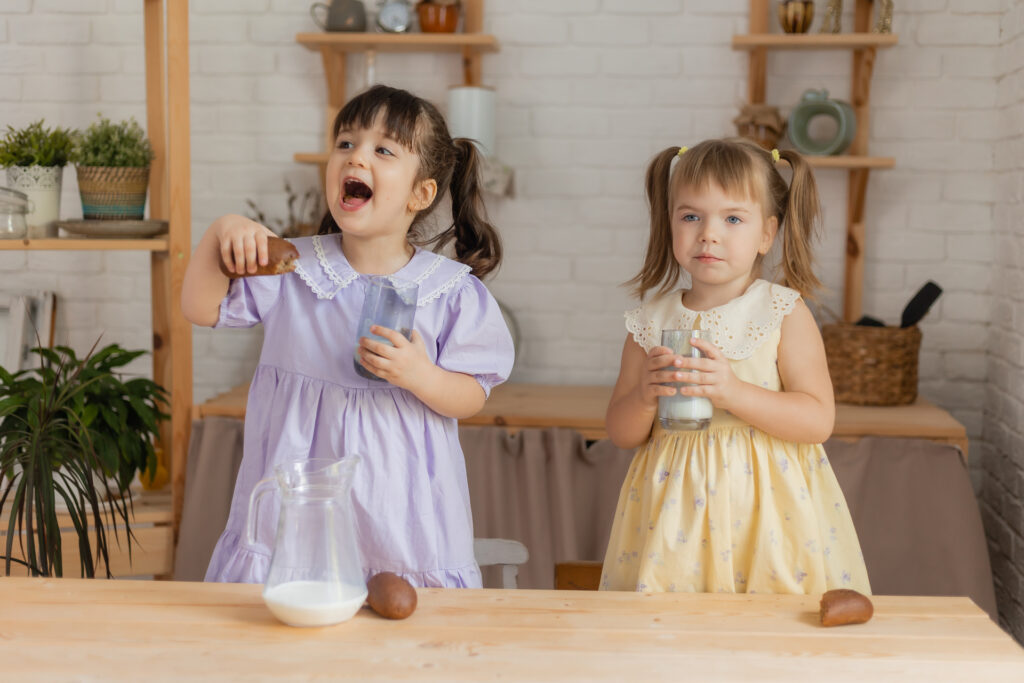
Tips for Supporting Preschool Conversation Skills
As children learn to communicate, educator support plays a huge role. Small adjustments in daily interactions can make conversations more meaningful and productive. Here are some simple tips to help ensure you keep kids on track and make the most of out these fun ideas.
Keep Questions Open-Ended
Instead of yes/no questions, ask:
- “What happened next?”
- “Why do you think that?”
- “How did you feel?”
Model Strong Conversations
Children learn by hearing adults communicate respectfully, listen actively, and respond thoughtfully.
Give Children Time to Respond
Some children need extra processing time before speaking. Pausing creates space for more participation.
Encourage Peer Conversations
Try stepping back occasionally so children can practice communicating directly with one another.
Celebrate All Communication Attempts
Even short answers or simple comments help build confidence and conversational growth.
Conversation skills are not built during one formal lesson. Preschooler conversations develop through playful moments, meaningful interactions, and daily opportunities to connect with others.
By intentionally weaving conversation-building activities into circle time, small groups, and learning centres, educators can help preschoolers become stronger communicators, more confident speakers, and more engaged learners.
More importantly, children also learn that conversations are not just about talking. Rather, they are about listening, connecting, and building relationships.
