What are Daycare Environments?
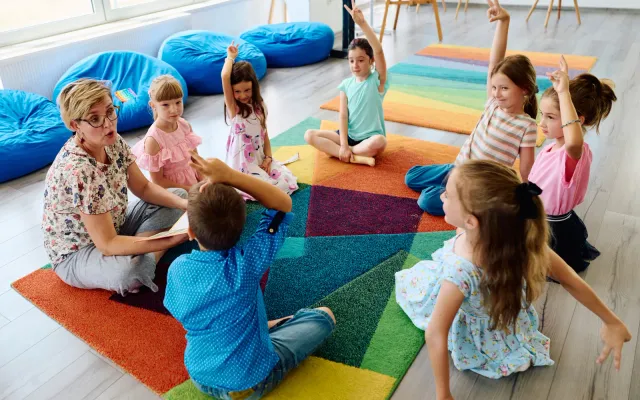
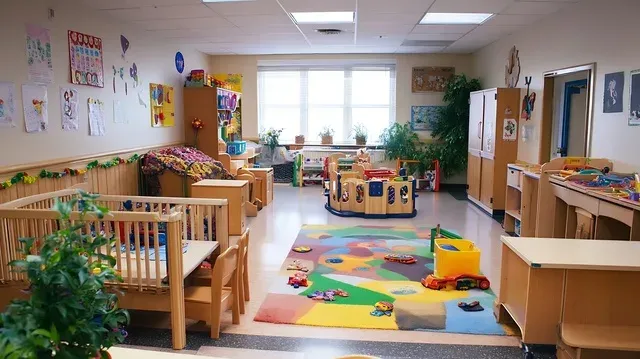
In child care, the environment is the “third teacher.” It shapes behaviour, learning, and relationships. For children, the goal is to create a space that they feel is a safe, engaging place where they belong.
A child care environment is so much more than decor – environments influence how smoothly your day runs, how your child’s day runs, and how supported the child is in your care
If you have behaviour issues in your center, this can often be a result of the way the environment is set up.
Let’s take a look at the various types of daycare environments and play areas to see what really works and what doesn’t, so that you can begin to create the best possible child care environments that provide numerous benefits to the children, as well as staff!
Dramatic Play Areas
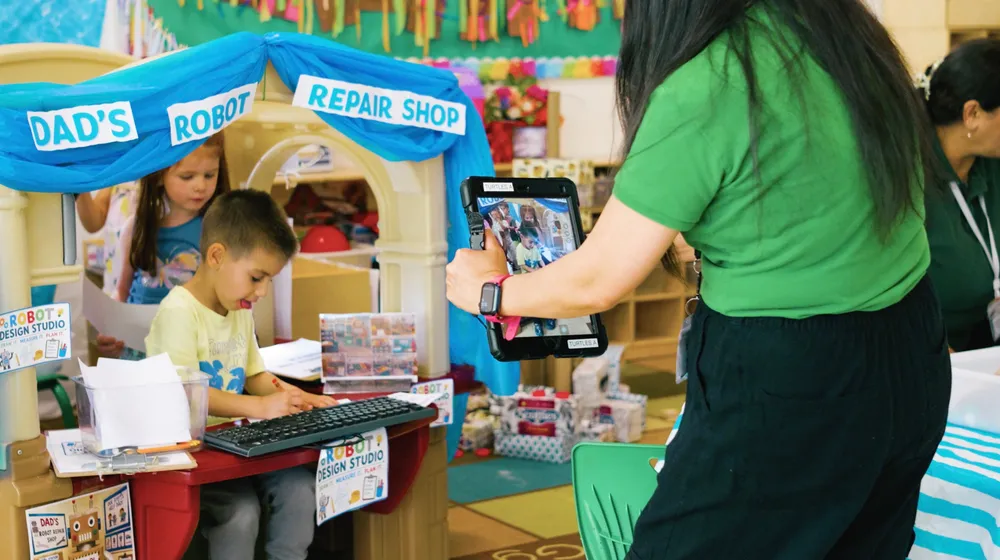
Dramatic play is a great way for kids to express themselves, practice all kinds of creativity, and learn how to share and play well with others. A few simple props and tools as well as a nice setup are often all that are needed.
What doesn’t work:
- Overstuffed with costumes, making it hard to view anything properly
- Broken Toys
- Missing fake food pieces
- No rotation (the same day in and day out)
The result: Children fight over materials and lose interest quickly
What does work:
- A variety of resources such as scarves and thrifted clothing pieces to evoke creativity
- Well organized bins
- Loose parts for creativity
- Interest-based, regularly rotated props (i.e. grocery store, doctor’s office)
The result: These help spark imagination and cooperative play
Outside Play Areas
Outside play areas don’t have to be full of expensive play equipment and toys. With kids, often the simpler the toys and activities, the better. Give them enough tools and activities to play with, while also allowing them to exercise their independence. Don’t forget that items found in the natural world can be your best friend!
What doesn’t work:
- Minimal toys
- Only one small climber
- Limited loose parts to enjoy
- Lack of shade
The result: Nothing to engage children, which creates boredom easily and increases likelihood of conflict.
What does work:
- Add simple items like chalk, buckets, and bubbles
- Add water and bubbles to a tuff tray or something similar (i.e. set up a truck wash station, baby cleaning, or simple bubble fun)
- A variety of natural elements such as sticks, pinecones and leaves
- Add a digging area if you have it
The result: Allows children to explore, problem-solve, and play for longer
Art/Creative Areas
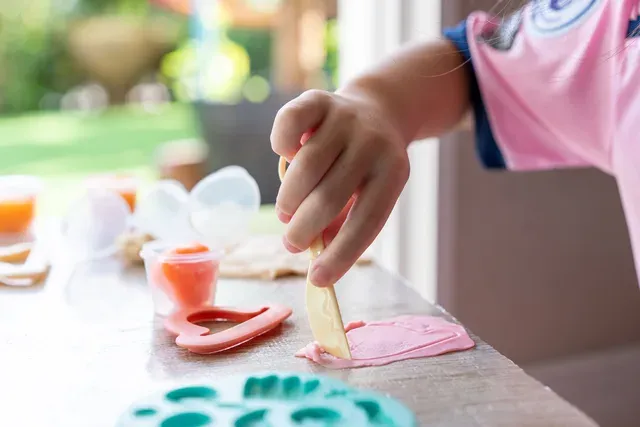
Don’t overlook the art station! Provide children with the freedom to create from basic art materials and loose parts, and you may be surprised what they come up. Offer a variety of items and art materials, from markers to paints to clay, and more, and what creativity come to life!
What doesn’t work:
- Only crayons and colouring sheets
- Limited items
- No loose parts or items to spark creativity
The result: Children finish quickly, won’t be a lasting engagement, stifles creativity
What does work:
- Add scissors, tape, and open-ended materials like paper scraps, cardboard, and fabric
- Set up invitations to create and open creativity
- Friendly, available bins that children can access when they want to
The result: Children can create longer, share ideas, and build fine motor skills
Calming Corners
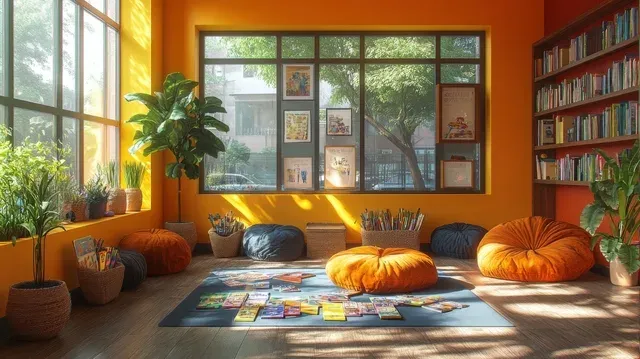
The benefits of calming corners are immense. Children experience big feelings daily, and a cozy, inviting retreat can help them in many ways. Calming corners can be simple to create, with minimal spend or setup required, yet the rewards are massive. The benefits of calming corners in daycare include:
Teaches Self-Regulation:
- Children can practice calming strategies such as breathing, reading books, or playing with fidget toys
- They learn how to connect body signals with healthy responses
Builds Independence and Choice:
- Children can choose to calm down on their own
- Strengthens problem-solving and emotional control
Safe, Non-Punitive Space:
- Calming corners are not time-out spaces, but instead are “time-in” spaces
- All feelings are welcome and supported
Encourages Reflection and Language:
- Builds emotional vocabulary and coping steps
Reduce Classroom Disruptions:
- Children return calm and ready to rejoin their peers
- Supports smoother routines for everyone
Calming Corners Tips
- Choose a quiet space, not near high-traffic areas
- Keep it small, cozy and defined with a rug, pillows or soft seating
- Add visual boundaries such as a bookshelf, curtain or tent so it feels safe.
What to Include in a Calming Corner:
- Comfort items like soft toys, pillows, fidgets, and weighted lap pads.
- Add visuals such as a feeling faces chart or a calm-down steps poster – Download our emotion zones chart!
- Add books with stories about emotions (i.e. The Color Monster)
- Sensory tools: stress balls, glitter jars, and sand timers
Routines and Visual Schedules
We’ve gone over how to set up the best environments for daycares, including art spaces, dramatic play areas, outdoor play environments, and calm spaces. Next, let’s take a look at the importance and impact of routines and visual schedules. Having regular routines and visual schedules help children know what’s coming and have predictability in their schedule. Children feel safe when they know what is coming next, less anxiety and more cooperation. The benefits of routines and visual schedules are also tremendous. They include:
Helps with Smoother Transitions
Visual cues can reduce meltdowns, wandering and repeated “what’s next?” questions.Builds Independence and Confidence
Children can check the schedule themselves, anticipate changes, and feel capable.Supports all Learnings
These visual cues can help all types and ages of learners, and are especially helpful for younger children, dual-language learners, and children with special needs. Download our free emotion zones flashcards!
How to set up Visual Schedules
- Use pictures and words with clear images for each daily activity (arrival, snack, outside play, circle, nap)
- Make it accessible and interactive: post at child’s eye level and review it together during morning circle
- Make it Exciting: Set up an interactive chart such as a moving clothespin or velcro card and move this along or down as the day progresses, so children can track time.
- Engage children: prompt them to ask what is next. This helps build memory, sequencing, and ownership.
- Keep it Flexible: adjust visuals for special events such as field trips or visitors, to prepare children for changes.
Practical Tips for Creating the Best Daycare Environments
The benefits to properly setting up these spaces are immense, for both children and caregivers. Having a well laid-out general area with multiple play options, as well as predictable routines, can make a huge impact on the overall happiness and mood of children, in turn making the days run smoother for everyone. Here are some simple and practical tips for creating the best daycare environments.
- Include educators in designing the spaces
- Rotate your materials to eliminate boredom
- Incorporate nature both inside and outside – think of adding a nature table inside
- Less is more in the rooms – too much stuff can be overwhelming and create sensory overload
- Don’t forget outdoor spaces – create invitations to create and utilize even the smallest of spaces; bring inside activities outside like artwork stations, ball area, etc. Put lots of thought into outside spaces. You don’t need to spend a lot of money to create a wonderful and engaging space.