Enrollment marketing works best when families can quickly judge whether your program fits their needs, see what makes your care valuable, and understand what to do next. In this ChildFriendly Pro Lunch & Learn, child care operator Krystal Churcher shares practical ways to improve family confidence, make learning visible, and respond to enrollment changes before empty spaces begin affecting your center’s sustainability.
Key takeaways
Make practical details—hours, age groups, fees, schedules, and openings—easy to find.
Show the evidence behind your claims, including how educators support children’s learning and well-being.
Track where families pause in the enrollment process instead of guessing why spaces remain open.
Keep waitlist information current and match families to openings that work for both the program and its staffing plan.
Use reliable systems, such as ChildFriendly Pro, to organize inquiries, family communication, onboarding, and learning updates.
Help families see a clear fit
Families are more likely to consider a program when they can tell whether it fits their schedule, budget, and expectations for care. Clear information about hours, age groups, fees, schedules, and available start dates helps families make that decision early—and saves staff time spent following up on inquiries that cannot become enrollments.
Practical fit is only one part of the decision. Families also look for signs of safety and accountability, meaningful learning, and dependable communication. A tour may go well, but confidence can fade if a family later receives conflicting information about a start date or registration step.
Review your website and inquiry materials from a parent’s point of view. Can someone find the basic details quickly? Can they picture what their child will experience? Reliable administrative systems help keep the answers consistent. ChildFriendly Pro supports family messaging, onboarding, and learning journals so teams can organize these parts of the experience in one place.
Show the value behind your promises
Specific examples help families understand what a program’s claims mean in practice. Phrases such as “learning through play” or “experienced educators” are more useful when paired with an example of what children do and how educators support them.
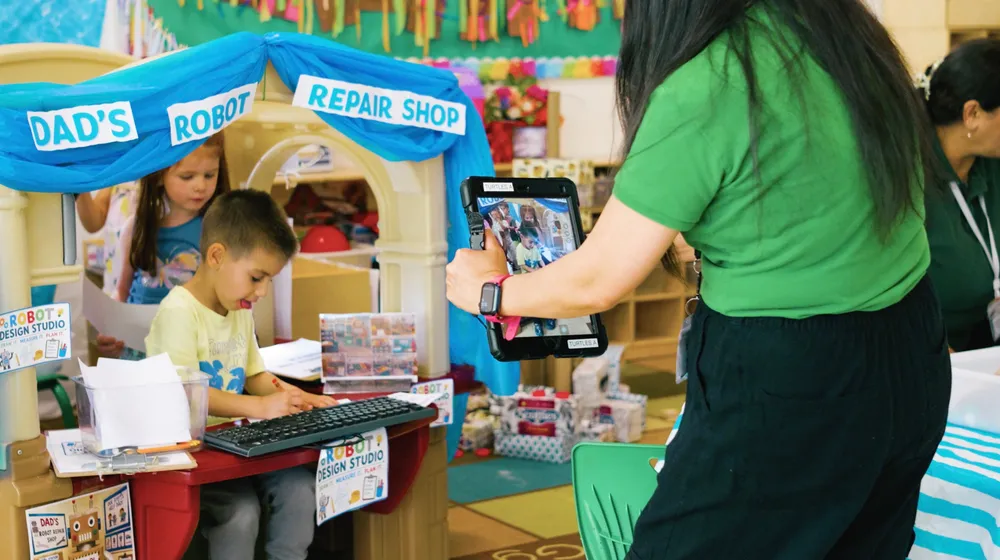
For instance, instead of only sharing a photo of a block structure, describe how children tested which blocks could support a bridge, reconsidered their design when it fell, and tried again. That brief account makes problem-solving visible and shows the educator’s judgment in deciding when to guide and when to give children room to think.
The same approach can strengthen tours and daily communication. Consider sharing a sample learning update and explaining what the child was exploring, what the educator noticed, and what skill the experience helped the child practice. A short, clear observation can show more than a broad claim about quality. ChildFriendly Pro’s journals and messaging tools can help teams share these updates consistently, without turning each one into a long report.
Treat compliance as evidence, not a slogan
Families may use public licensing and compliance information when comparing programs, so operators should know what is on the record and be prepared to explain it accurately. In Alberta, public inspection information and notices can shape a family’s view of a center, although an inspection reflects a point in time and does not describe every part of a child’s experience.
If a family asks about a finding, explain what was identified, what changed, and how the team checks that the change is working. “We reminded staff” gives little detail. Describing a revised transition process, who is responsible for it, and how records are reviewed gives families something concrete to understand.
The same principle applies to positive claims. Explain the routines and practices behind them, and make sure the team can deliver what marketing materials promise during ordinary busy days—not just during a tour.
Find the point where families need support
Enrollment numbers are most useful when they show where families are getting stuck. Record inquiries, tours, enrollments, withdrawals, and waitlist status so you can identify patterns before changing advertising or program offerings.
PatternWhat to checkFewer suitable inquiriesWhether your listed hours, ages, fees, and openings are clear and currentInquiries without toursWhether replies answer the family’s question and offer a practical next stepTours without enrollmentWhether schedule, cost, program details, or another option influenced the decisionVacancies alongside a waitlistWhether listed families still need the age group, days, and start date you can offer
For example, if 10 families attend tours in two different periods but enrollments fall from six to two, the drop is worth investigating. It does not prove the tours are poor. Families may have different needs or start dates, or they may have chosen a program with a better fit. A respectful follow-up—asking whether schedule, cost, program details, or next steps affected their decision—can reveal useful patterns.
Keep openings and waitlists current
A long waitlist does not guarantee that a space can be filled. Families’ circumstances change, and an old inquiry may no longer match the available age group, days, or start date. Confirm those details regularly and record the date, answer, next action, and person responsible.
Also distinguish licensed capacity from the space and staffing arrangements you can realistically offer. A potential enrollment should work with the center’s schedule and staffing plan, not just appear to fit on paper. ChildFriendly Pro can help organize waitlists and enrollment steps; its dynamic space forecasting projects room openings 30, 60, and 90 days ahead using birthdates and age-transition thresholds. That information can help operators plan, but families’ current needs still need confirmation.
A practical next step is to review five current inquiries or pending registrations. For each one, identify the family’s current needs, the opening that may fit, and the next action. This small review can turn a list of names into a managed enrollment process.
Choose one change and check the result
The most effective first move is to address one specific pattern, assign responsibility, and review what happens. If families inquire but do not book tours, revise the first reply. If tours happen but enrollment does not follow, improve the information or evidence families see during the visit. If vacancies appear despite a waitlist, verify family needs and forecast upcoming transitions.
Marketing is not separate from daily operations. It is the experience families have from their first question through onboarding and the child’s first weeks. ChildFriendly Pro can support that process with organized inquiries, onboarding checklists, messaging, and learning journals. Strong systems reduce administrative gaps and help educators spend more time focused on children.
The goal is not to promise more than a team can deliver. It is to show the right families what your program can reliably provide—and make the path from first inquiry to enrollment clear.