In ChildFriendly Pro's August 2026 ECE Learning Lab, Krystal Churcher explained that educators build early literacy through three low-prep storytelling invitations (a story basket of a few meaningful objects, child-made puppets with no example model, and a block-based story scene challenge), noting that a child saying roar while moving a dinosaur is already storytelling.
What the session covered
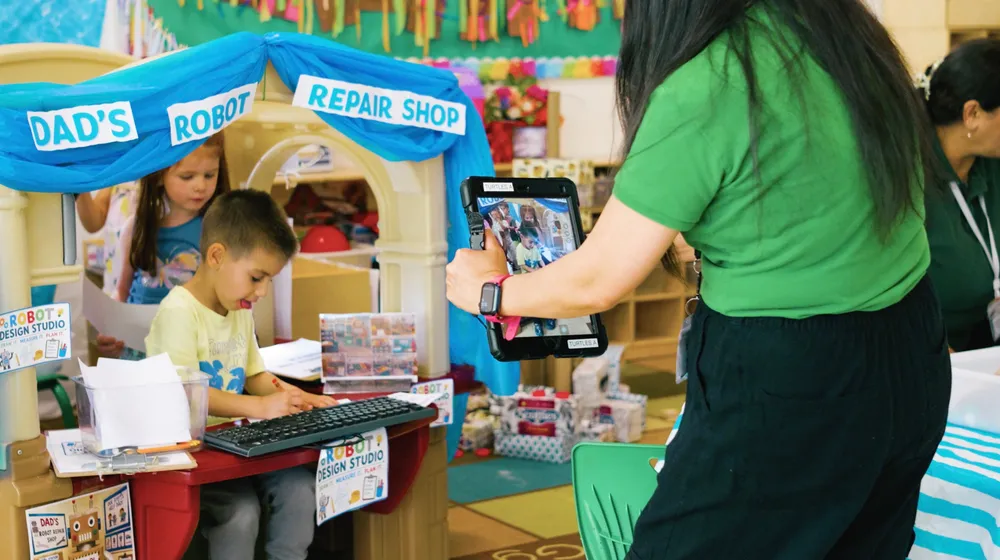
The session applied the Learning Lab framework of Explore, Create and Build to storytelling, imagination and dramatic play. Churcher described Explore as noticing, touching, listening and building vocabulary through the senses; Create as making choices, expressing ideas and developing fine motor skills; and Build as combining ideas through sequencing, problem solving, collaboration, early literacy and planning. She stressed that these are not three separate lesson plans and that children do not move through them in a straight line. In her description, storytelling with young children is broader than reading a book at circle time: children can hold, move, hide and feed a character, turning a story they heard into one they experience. She said storytelling also does not require full sentences, so covering a doll with a blanket or moving a bear into a basket counts as representing an idea. Churcher framed the educator's role as setting up a meaningful environment, giving children time, and resisting the urge to control where play goes, using materials centers already have.
What goes in a story basket for toddlers and preschoolers?
Churcher described a story basket as a basket with a few meaningful, intentional objects, not a laminated, velcroed resource that took two hours to make. Contents might include a book, a soft animal, a scarf, a familiar object or a photograph linked to the children's current interests. For 12 to 18 months, she suggested a soft basket, a board book, a stuffed animal, fabric squares and family or animal photos, with the educator sitting on the floor and naming textures such as soft, rough or fuzzy. Her key instruction for this age was to ask and then wait, because adults often answer their own question half a second later. For toddlers, add animal figures, toy food and picture cards, and follow the child's idea: if the bear goes to bed, narrate that the bear is going to bed. For 3 and 4 year olds, add character props, setting pieces, clipboards and crayons, let children choose characters and where the story begins, and invite them to retell familiar stories with a new ending.
Should educators show children an example puppet before a craft?
No. Churcher said educators do not need an example puppet and should avoid pre-cut character kits, such as cutouts for a familiar fairy tale, so the activity stays child-led. Materials can be paper bags, craft sticks, scrap paper, fabric, felt, yarn, tape and glue sticks, laid out in a space where mess is acceptable. For 12 to 18 months, educators can prepare a paper bag or card base and offer large stickers, felt and crayons, and may add mirrors; the goal is participation, not the finished craft. For toddlers, offer a manageable selection rather than every material, let the child choose the base, and do not correct the result: if a child says the puppet is a cat with six pieces of yarn, it is a cat. For preschoolers, invite children to develop the character by asking its name, what it is doing and what problem it might solve, such as searching for something or going on a journey. Churcher advised celebrating the idea rather than the polished puppet.
How should educators document storytelling play for families?
Churcher said documentation can be simplified to three questions: what did the child do, what skill did I see, and what is the developmental connection. She contrasted a note such as we played with puppets today, which does not communicate the learning, with a fuller observation: a child chose the bear puppet, placed it in the basket and said the bear is sleeping, covered it with fabric and invited another child to help wake it, demonstrating imagination, early storytelling, vocabulary, sequencing and social connection. Useful terms for daily updates include imagination, sequencing, listening and attention, self-regulation, creative expression, language and vocabulary, and collaboration. In the Build invitation, she advised watching how children build, communicate and change the story. She noted that toddlers may join group play for 30 seconds and return five minutes later, and educators should not force cooperative play before children are ready. When a toddler's structure falls, educators should name it and invite another try rather than rebuild it themselves.
Storytelling Explore, Create, Build setup from the session
| Time | Key point | What centers should do |
|---|---|---|
| 05:50 | Explore, Create and Build are three ways children engage, not three separate lesson plans. | Let children move back and forth between the invitations. |
| 07:52 | Churcher: storytelling does not require full sentences; actions like covering a doll or saying roar count. | Recognize nonverbal and one-word storytelling in observations. |
| 09:23 | A story basket is a few meaningful objects, not a laminated resource that takes two hours to make. | Fill a basket with a book, soft animal, scarf and photo tied to current interests. |
| 12:51 | Churcher: adults often answer their own questions half a second later. | Ask, wait, and watch eyes, hands and nonverbal responses. |
| 17:48 | No example puppet is needed; avoid pre-cut character kits. | Put out open materials and let children design their own characters. |
| 21:47 | Do not correct children's puppets. | Accept the child's description of what they made. |
| 24:41 | The Build invitation is a story scene challenge using blocks, boxes, figures and picture cards. | Define an indoor or outdoor space with materials within reach. |
| 26:56 | Churcher: for 12–18 months, repetition such as in and out or hiding and finding is how learning happens. | Allow repeated actions before trying to extend the play. |
| 28:44 | Churcher: toddlers may join group play for 30 seconds and return later. | Support turn-taking without forcing cooperative play. |
| 33:00 | Simple documentation: what the child did, the skill seen, the developmental connection. | Replace notes like we played with puppets with specific learning statements. |
How ChildFriendly Pro automates this
Churcher contrasted short photo captions with detailed observations that name imagination, sequencing and vocabulary in daily family updates. ChildFriendly Pro's Classroom & Learning Tools connect those observations to frameworks and child portfolios, and its AI features help draft learning stories; no product demo was shown in this session.
Next steps
- Free ECE Learning Labs with professional development certificates
- Free Storytelling, Imagination & Dramatic Play educator guide
- Child portfolios, observations and lesson planning tools
- Book a ChildFriendly Pro demo