Check base materials first
Oats, rice and sand are suggested as base materials. Check allergies, your centre’s policy on using food in play and choking risks for your youngest group before choosing.
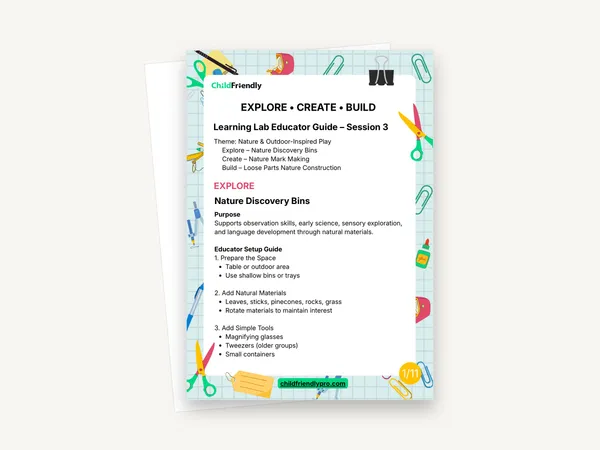
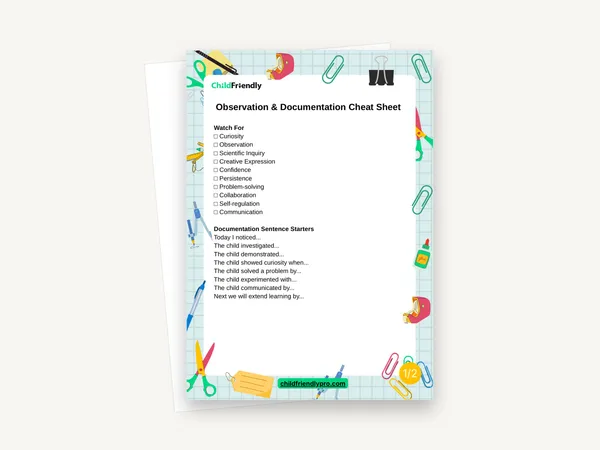
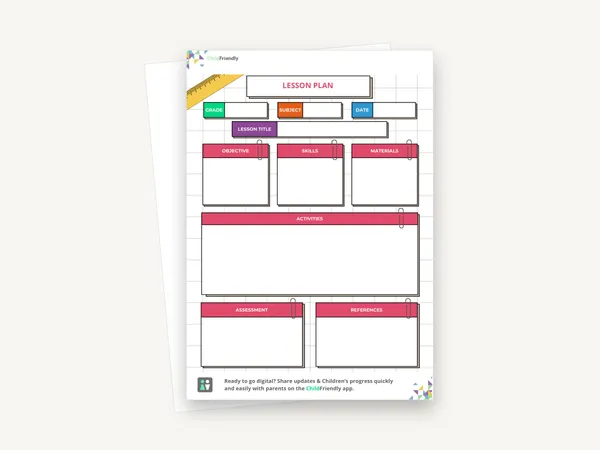
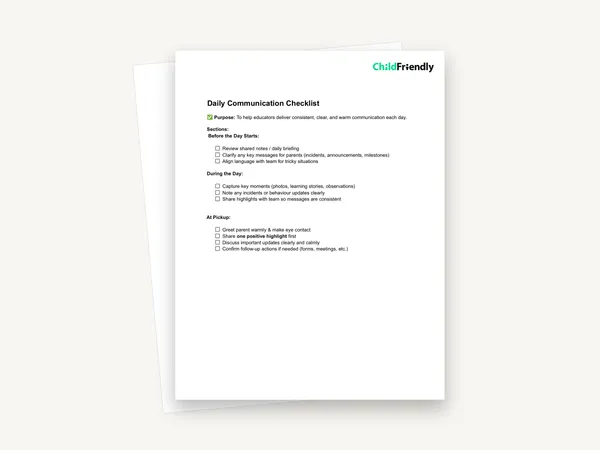
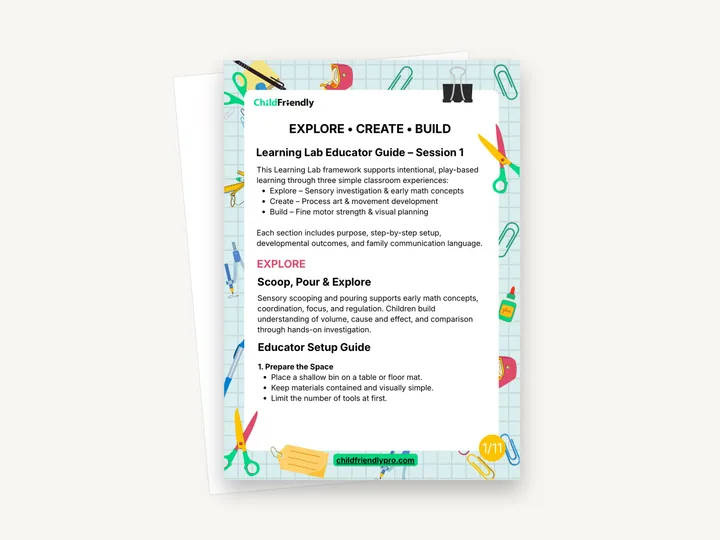
An 11-page educator guide to three play-based classroom experiences: Scoop, Pour & Explore (sensory play and early math), Paint, Roll & Create (process art) and The Sticky Art Wall (fine motor and visual planning). Each has setup steps, adaptations for three age groups with materials, focus and educator language, and a Family Update to send home.
No sign-up required. Print it and share it with your team — it’s free for any child care program to use.
What’s inside
How to use it
Tips from operators
Learned the hard way across 3,000 child care spaces — and from the directors and educators who join our Lunch & Learns and Learning Labs.
Oats, rice and sand are suggested as base materials. Check allergies, your centre’s policy on using food in play and choking risks for your youngest group before choosing.
The guide’s process-art advice is to focus on movement and experimentation. Without a finished example on the table, children are less likely to copy.
Tape the contact paper where children can reach the whole surface while standing, and secure the edges with painter’s tape as the guide describes.
Do it digitally in ChildFriendly Pro
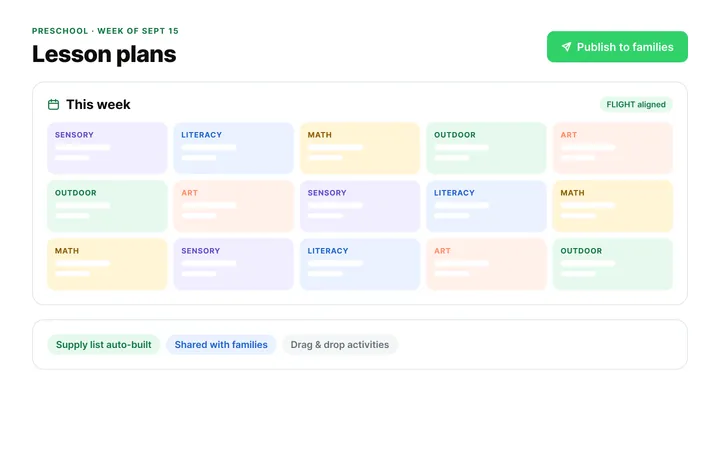
Build the same plan in ChildFriendly Pro and every observation you log is tagged to FLIGHT, ELECT, ELF or your own outcomes, added to each child’s portfolio and shared with families in their daily journal.
FAQ
Can’t find your answer? Chat with a real person who has run a child care center.
Read more FAQsEach experience is adapted for 12–18 months, 19 months–under 3 years and 3–4 years. It does not include adaptations for younger infants or school-age children.
Mostly everyday items: a shallow bin, scoops, cups and a base material; large paper, paint and tools such as toy cars and sponges; contact paper, painter’s tape and lightweight loose parts.
The Explore setup steps run 1, 2, 4, 5 — there is no step 3 — and one focus list in the Sticky Art Wall section reads “Pause and effect”, which looks like a typo for “Cause and effect”. The rest reads as intended.
Yes, that is what it is for. Each age group has a short paragraph explaining what the children did and why it matters. Edit it so it reflects what happened in your room.
More templates
Child Development & Programming
Child Development & Programming
Child Development & Programming
Family Engagement
Keep learning
Educator (ECEs) Workshops · Recording
Play-based learning is powerful—but sometimes it can be difficult to clearly explain the why behind everyday activities.
Watch the recordingNewsletter
We add new templates and tools most months. Subscribe and they land in your inbox — along with Lunch & Learn and Learning Lab invitations.
Join hundreds of child care professionals across North America. CASL compliant.
You can unsubscribe anytime. CASL/CAN-SPAM compliant.