Skip to content
ChildFriendly Pro
Free templateChild Development & Programming

Quick Interpretation Guide for Mealtime Observations

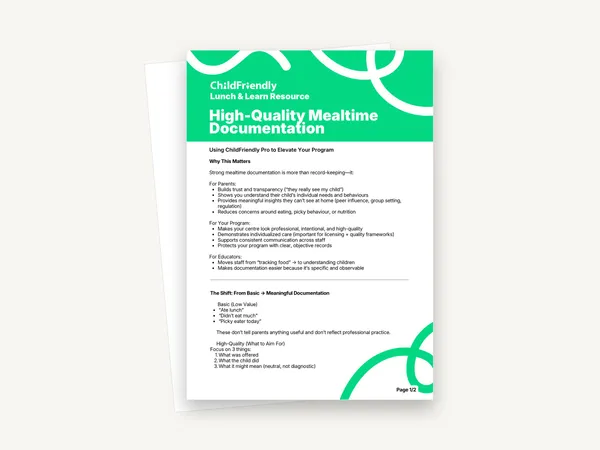
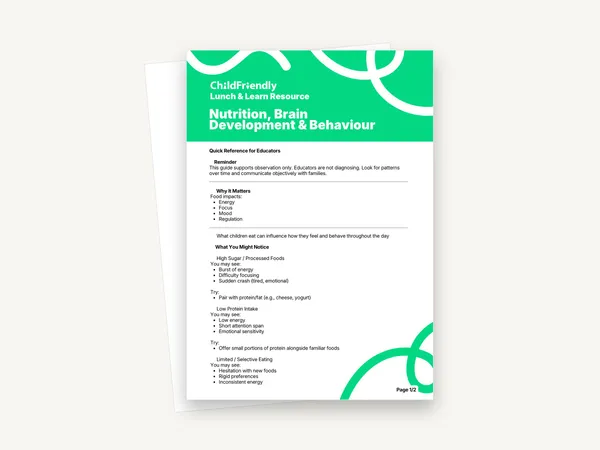
A three-page Lunch & Learn resource that walks through seven common mealtime behaviours. For each one it lists what you might see, what it may mean, and an example of objective wording to document. It is for observation and reflection only — the guide states that educators are not diagnosing.

Format
PDF guide · A4
Pages
3
Best for
Educators · room leads
Updated
Oct 2026

No sign-up required. Print it and share it with your team — it’s free for any child care program to use.
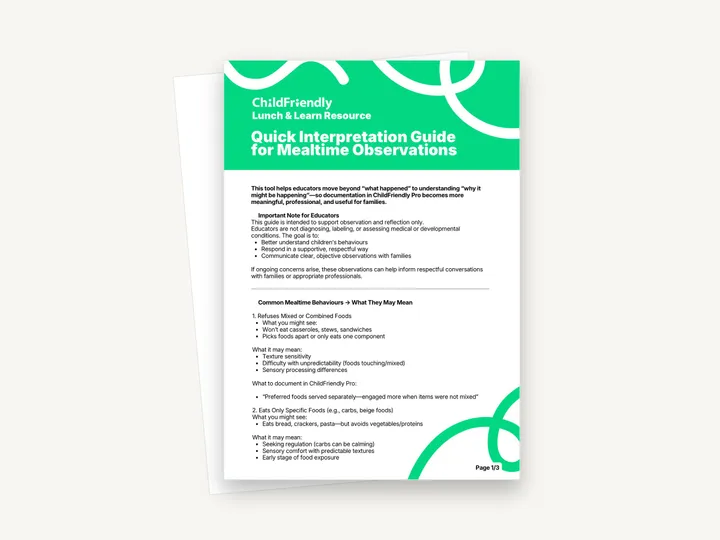
Preview of the Quick Interpretation Guide for Mealtime Observations

What’s inside

Seven mealtime behaviours, what they may mean and what to write

  • Important Note for EducatorsThe guide is intended to support observation and reflection only. Educators are not diagnosing, labeling or assessing medical or developmental conditions; the goal is to understand behaviours, respond supportively and share clear, objective observations with families.
  • Common Mealtime Behaviours → What They May MeanSeven numbered behaviours: refuses mixed or combined foods; eats only specific foods; gagging, spitting out or strong reactions; eats very quickly or large quantities; refuses to eat at all; plays with food instead of eating; emotional or dysregulated at mealtime.
  • What you might see / What it may meanEach behaviour has a short list of what it looks like at the table and a list of possible explanations, worded as possibilities rather than conclusions.
  • What to documentOne example sentence per behaviour, such as “Chose not to eat—remained at table and engaged socially with peers”, to use as a model for your own notes.

How to use it

Four steps to put it to work this week

  1. 1
    Start with the Important NoteRead the note on page one with your team so everyone is clear that this is a reflection aid, not an assessment tool.
  2. 2
    Find the behaviour you observedMatch what happened at the table to one of the seven numbered behaviours and read its “What you might see” list.
  3. 3
    Consider what it may meanRead the possible explanations and think about which fit this child and this day. Treat them as possibilities to keep in mind.
  4. 4
    Write an objective noteUse the “What to document” example as a model and record what the child did and how you responded in your daily log or observation.

Tips from operators

What centers that use this well do differently

Learned the hard way across 3,000 child care spaces — and from the directors and educators who join our Lunch & Learns and Learning Labs.

Document the behaviour, not the reason

The guide’s example notes describe what the child did and how they responded. Keep the “may mean” ideas for your own reflection.

Wait for a pattern

One refused lunch is not a concern in itself. Look at a few weeks of notes before raising it with a family.

Keep a copy with the lunch things

Three printed pages in the room binder are quicker to check at mealtime than a file on the office computer.

Do it digitally in ChildFriendly Pro

Plan the week in the app — tagged to your framework automatically

Build the same plan in ChildFriendly Pro and every observation you log is tagged to FLIGHT, ELECT, ELF or your own outcomes, added to each child’s portfolio and shared with families in their daily journal.
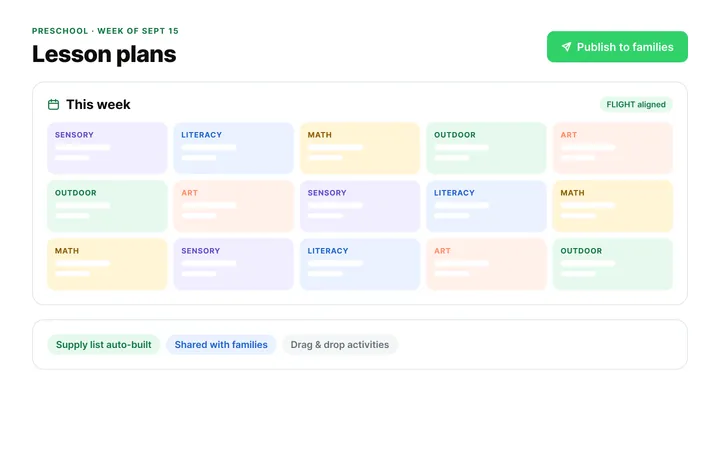
  • Pre-loaded provincial frameworks and outcome tags
  • AI learning stories from a photo and two lines of notes
  • Portfolios and progress reports that build themselves
Classroom & Learning Tools in ChildFriendly Pro

FAQ

Questions about the Quick Interpretation Guide for Mealtime Observations

Can’t find your answer? Chat with a real person who has run a child care center.

Read more FAQs
Can educators use this to identify sensory or developmental issues?

No. The guide says educators are not diagnosing, labeling or assessing medical or developmental conditions. It offers possible explanations to help you respond supportively and write clearer notes.

What should we do about ongoing concerns?

The guide says that if ongoing concerns arise, your observations can help inform respectful conversations with families or appropriate professionals.

Is there space to write on it?

No. It is a three-page reading guide, not a recording form. Write your notes wherever you normally record meals and observations.

Do I need ChildFriendly Pro to use it?

No. The guide refers to documenting in ChildFriendly Pro, but the example wording works in any daily report or observation record.

Keep learning

Related resources from the Academy

Newsletter

Get every new template the week it’s released

We add new templates and tools most months. Subscribe and they land in your inbox — along with Lunch & Learn and Learning Lab invitations.
  • New templates and classroom tools as they’re published
  • Invitations to free Lunch & Learns and Learning Labs
  • Licensing and funding updates for your province
  • No spam — one email a month, unsubscribe anytime
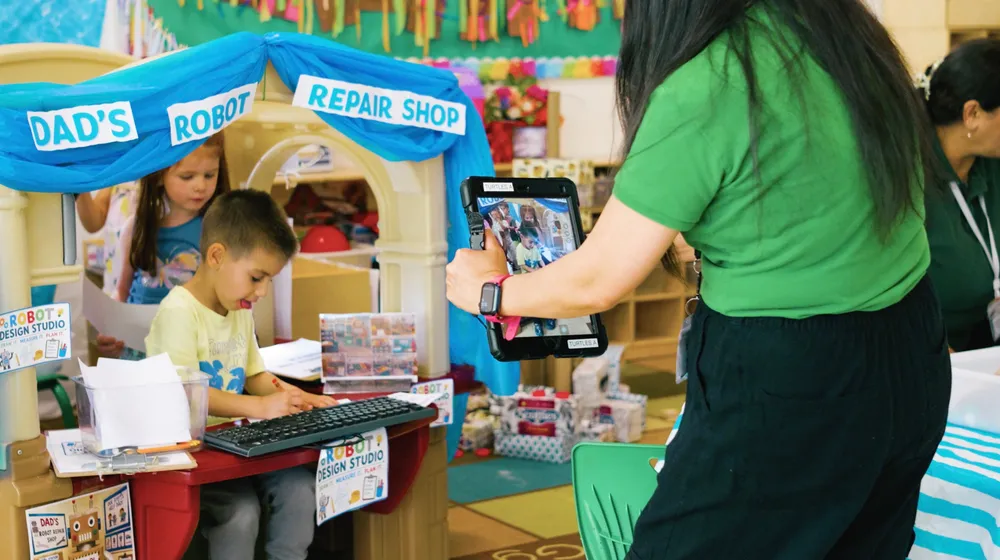
An educator taking a photo of children playing at a pretend shop

Get more from ChildFriendly Pro

Join hundreds of child care professionals across North America. CASL compliant.

You can unsubscribe anytime. CASL/CAN-SPAM compliant.