Skip to content
ChildFriendly Pro
Free templateChild Development & Programming

Meet the Developmental Needs of the Children Policy Template

A three-page sample policy describing how a child care center meets children’s social, physical, intellectual, creative, emotional and spiritual or self-concept needs, with a short bulleted list of practices under each heading.

Format
Printable PDF · US Letter
Pages
3
Best for
Directors · owners · program leads
Updated
Oct 2026

No sign-up required. Print it and share it with your team — it’s free for any child care program to use.

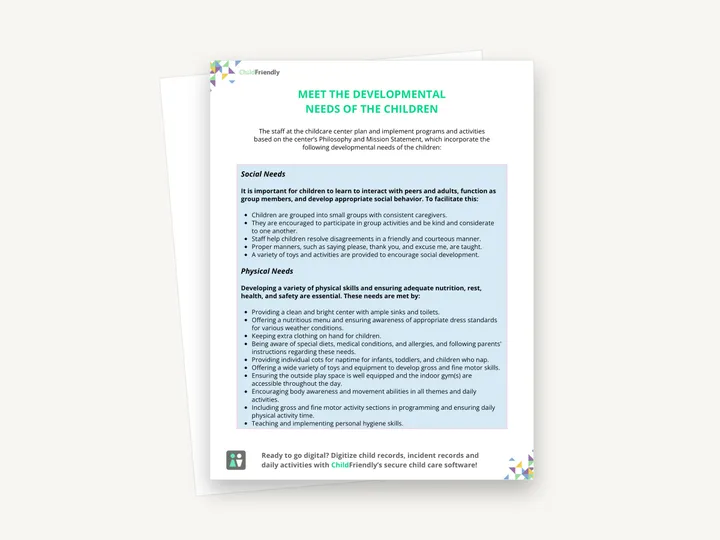
Preview of the Meet the Developmental Needs of the Children Policy Template

What’s inside

Six areas of need, each with the practices that meet it

  • Social NeedsSmall groups with consistent caregivers, group activities, help resolving disagreements, teaching manners, and a variety of toys and activities that encourage social development.
  • Physical NeedsThe longest section: a clean, bright center, a nutritious menu, extra clothing, awareness of special diets, medical conditions and allergies, individual cots for naptime, gross and fine motor equipment, outdoor and indoor gym space, daily physical activity, personal hygiene and medication handled under the center’s medication policies.
  • Intellectual NeedsBooks, puzzles, science and sensory activities, monthly themes with matching books and props, interest-based planning, a literacy center and a music center, and chances through the day to learn new words and follow directions.
  • Creative and Emotional NeedsFree art materials, drama, role-playing and music with minimal adult interference; and for emotional needs, circle-time discussion of families and emotions, caregivers knowing the child’s registration information, and close relationships through small groups.
  • Spiritual or Self-Concept NeedsHelping every child feel valued, with examples such as show and tell, celebrating accomplishments, displaying artwork and family tree walls, followed by a closing policy statement.

How to use it

Four steps to put it to work this week

  1. 1
    Compare it with what your program doesGo through each bullet and mark it true, partly true or not true for your center. Indoor gyms, cots for every napping child and monthly themes will not apply everywhere.
  2. 2
    Rewrite it in your own documentThe PDF cannot be edited. Retype the sections you are keeping, name your center, and tie the opening statement to your own Philosophy and Mission Statement.
  3. 3
    Check your regulation’s wordingMany jurisdictions require a written program statement on developmental needs. Match your headings and content to what your licensing rules ask for.
  4. 4
    Use it in planningGive room teams the final version and check lesson plans against the six areas so the policy describes what actually happens.

Tips from operators

What centers that use this well do differently

Learned the hard way across 3,000 child care spaces — and from the directors and educators who join our Lunch & Learns and Learning Labs.

Fix the layout slips when you retype

In the PDF, a stray ‘Contacting Supporting Agencies’ heading sits under Intellectual Needs, the bullets beneath it are set in italics, and one Emotional Needs bullet ends with a leftover sentence fragment. Leave those out of your version.
Only promise what you deliver

A licensing officer or parent may hold you to every line. Remove any practice you cannot show on an ordinary day.

Decide how to title the last section

‘Spiritual or Self-Concept Needs’ is about identity and self-esteem, not religion. Rename it if the wording could be misread by your families.

Do it digitally in ChildFriendly Pro

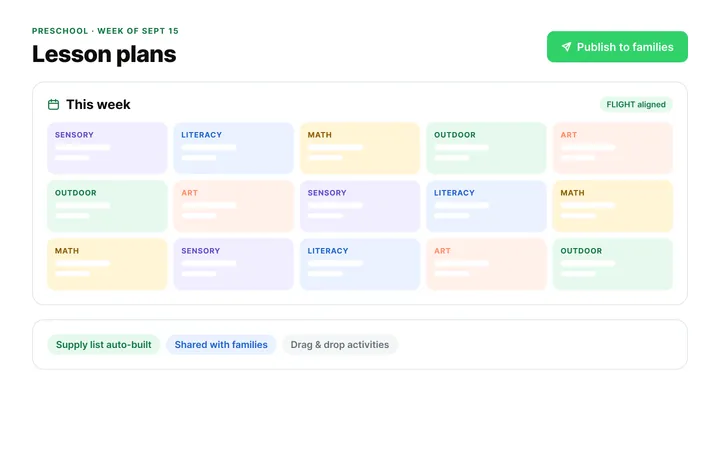
Plan the week in the app — tagged to your framework automatically

Build the same plan in ChildFriendly Pro and every observation you log is tagged to FLIGHT, ELECT, ELF or your own outcomes, added to each child’s portfolio and shared with families in their daily journal.

  • Pre-loaded provincial frameworks and outcome tags
  • AI learning stories from a photo and two lines of notes
  • Portfolios and progress reports that build themselves
Classroom & Learning Tools in ChildFriendly Pro

FAQ

Questions about the Meet the Developmental Needs of the Children Policy

Can’t find your answer? Chat with a real person who has run a child care center.

Read more FAQs
Is this a form to fill in for each child?

No. It is a center-wide policy statement written in full sentences and bullets. There are no fields, checkboxes or signature lines.

Is it tied to a curriculum framework?

No framework or regulation is named. It refers only to the center’s own Philosophy and Mission Statement, so you will need to add any reference your jurisdiction expects.

Does it include developmental milestones or checklists?

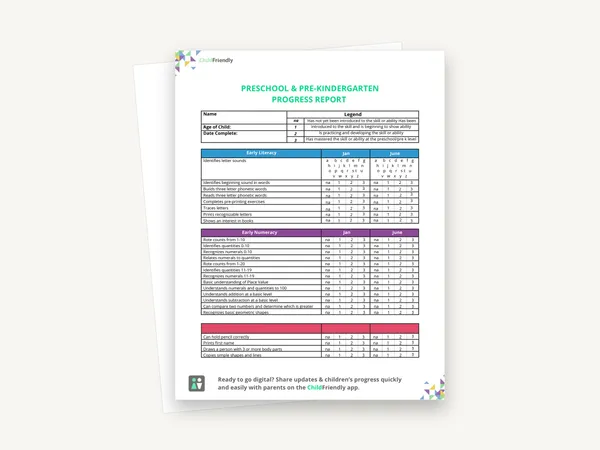
No. It describes how the program supports development, not what to expect at each age. For tracking an individual child, use a progress report or developmental checklist alongside it.

Can I use it for a dayhome?

The wording assumes a center with staff, several rooms and an indoor gym. The six headings still work for a home-based program, but most of the bullets will need rewriting.

Keep learning

Related resources from the Academy

Newsletter

Get every new template the week it’s released

We add new templates and tools most months. Subscribe and they land in your inbox — along with Lunch & Learn and Learning Lab invitations.

  • New templates and classroom tools as they’re published
  • Invitations to free Lunch & Learns and Learning Labs
  • Licensing and funding updates for your province
  • No spam — one email a month, unsubscribe anytime
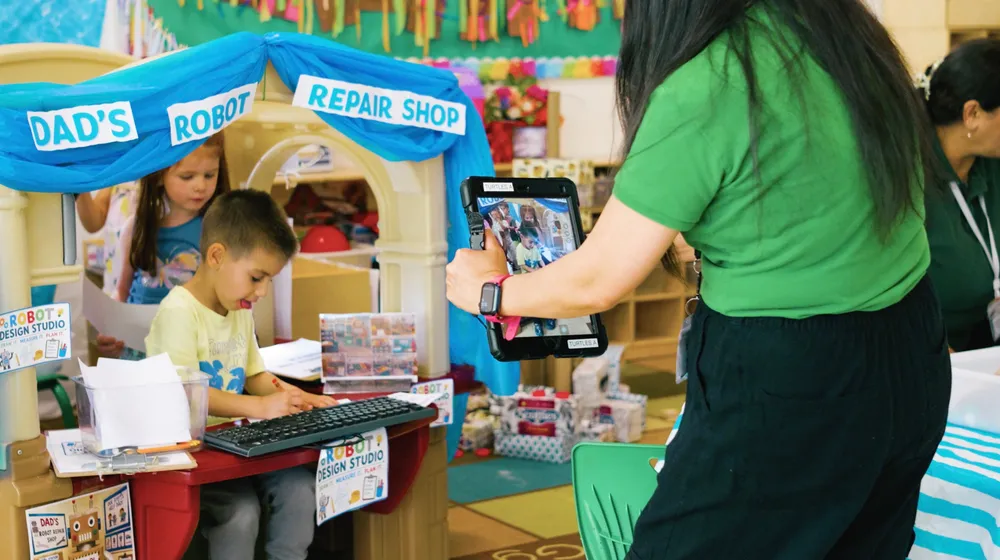
An educator taking a photo of children playing at a pretend shop

Get more from ChildFriendly Pro

Join hundreds of child care professionals across North America. CASL compliant.

You can unsubscribe anytime. CASL/CAN-SPAM compliant.